
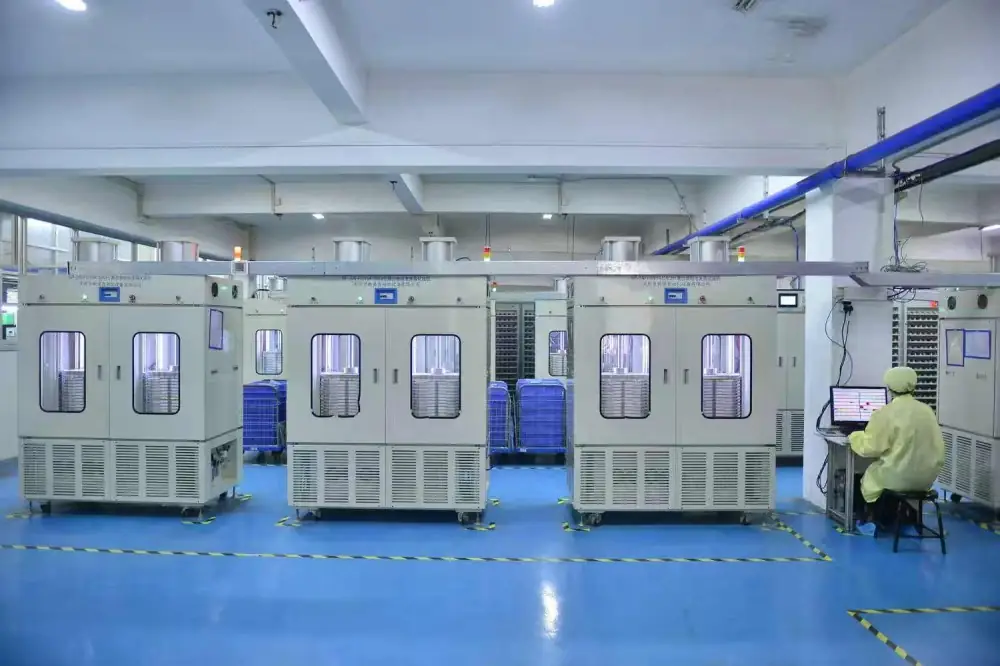
Battery Recycling and Repurposing Production Line Solutions
Regulatory Framework and Global Recycling Imperative
The global life cycle management of rechargeable batteries has entered a strictly regulated era driven by circular economy mandates, resource security, and environmental safety. Regulation (EU) 2023/1542 establishes comprehensive benchmarks governing waste batteries across multiple critical categories: Light Means of Transport (LMT) batteries, starting, lighting, and ignition (SLI) batteries, electric vehicle (EV) batteries, and industrial energy storage batteries.
The directive mandates the free-of-charge collection of waste LMT batteries and spent units harvested from waste electrical and electronic equipment (WEEE), dictating collection frequency based on geographical coverage, volume, and chemical hazard levels. Beyond collection, the regulation enforces mandatory minimum levels of recycled cobalt, lead, lithium, and nickel in new batteries, alongside verified recycling efficiency targets.
To address these legal requirements and technical challenges, automated recycling and disassembly production lines must decouple complex pack architectures safely while categorizing materials into two distinct value recovery tracks: second-life repurposing and closed-loop hydrometallurgical/pyrometallurgical material recycling.
Dual-Track Processing Architecture
Modern pack architectures feature diverse mechanical layouts, thermal adhesives, busbar configurations, and cell chemistries. Industrial recycling lines must feature high operational flexibility, routing incoming spent battery assets through two discrete pathways based on their State of Health (SoH):
- Repurposing Pathway: Focuses on non-destructive disassembly, comprehensive testing, and regrouping of cells that retain significant residual life (typically 70% to 80% original capacity), redirecting them into lower-demand energy storage and backup applications.
- Material Recycling Pathway: Focuses on end-of-life cells, rejected modules, and manufacturing scrap. This stream utilizes controlled thermal deactivation, inert mechanical crushing, physical separation, and chemical extraction to recover high-purity battery-grade metals.
The Repurposing Track: Second-Life Battery Processing
1. Battery Information Logging and Digital Registration
Incoming battery packs undergo identification using optical scanners and diagnostic interfaces. Serial numbers, original manufacturer data, chemistry profiles (LFP, NMC, NCA), and historical operating cycles are captured and logged into the local control database, ensuring full alignment with digital battery passport protocols.
2. Collection and Logistics Receiving
Packs are systematically unloaded and sorted by form factor and chemistry. Dedicated conveyor lines and automated storage buffering stations manage incoming volume, utilizing non-conductive rollers and thermal monitoring sensors to isolate damaged or unstable units immediately upon arrival.
3. Controlled Deep Discharging
Residual energy must be safely removed to eliminate arc flash, thermal runaway, and electrical shock hazards during mechanical handling:
- Regenerative Discharging: High-voltage battery systems are connected to automated regenerative discharge cabinets that feed captured electrical energy back into the internal plant power grid.
- Passive/Chemical Discharging: Severely degraded or physically damaged packs that cannot accept physical terminal leads undergo immersion discharge in controlled, conductive aqueous solutions to achieve a zero-volt state.
4. Unpacking and Mechanical Dismantling
Trained operators assisted by semi-automated mechanical workstations strip the pack down to individual cell clusters:
- Exterior housings, crash structures, and sealing gaskets are mechanically detached using automated tool changers and pneumatic nutrunners.
- High-voltage distribution units, internal wiring harnesses, and BMS boards are carefully disconnected and sorted for separate printed circuit board (PCB) recycling.
- Ultrasonic or mechanical cutters separate adhesive thermal pads and disconnect cell busbars without puncturing the underlying cell jackets or thermal vents.
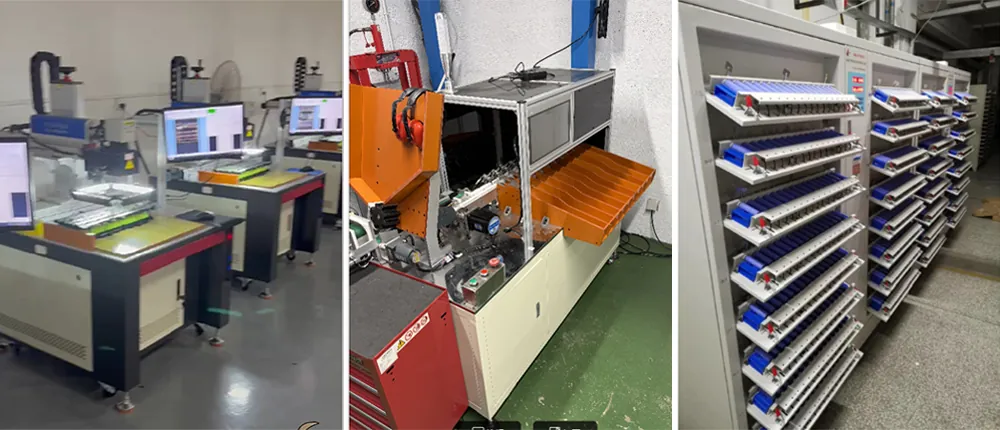
5. Cell Voltage and Impedance Sorting
Individual cells extracted from the modules undergo high-speed parametric evaluation:
- Four-wire Kelvin probes assess Open-Circuit Voltage (OCV) down to millivolt accuracy.
- Alternating Current Internal Resistance (AC-IR) testing at 1 kHz identifies internal degradation, micro-shorts, or corrosion within individual jelly rolls or electrode stacks.
- Cells exhibiting high resistance or erratic voltage profiles are automatically rejected and routed to the material recycling line.
6. Dynamic Capacity Sorting
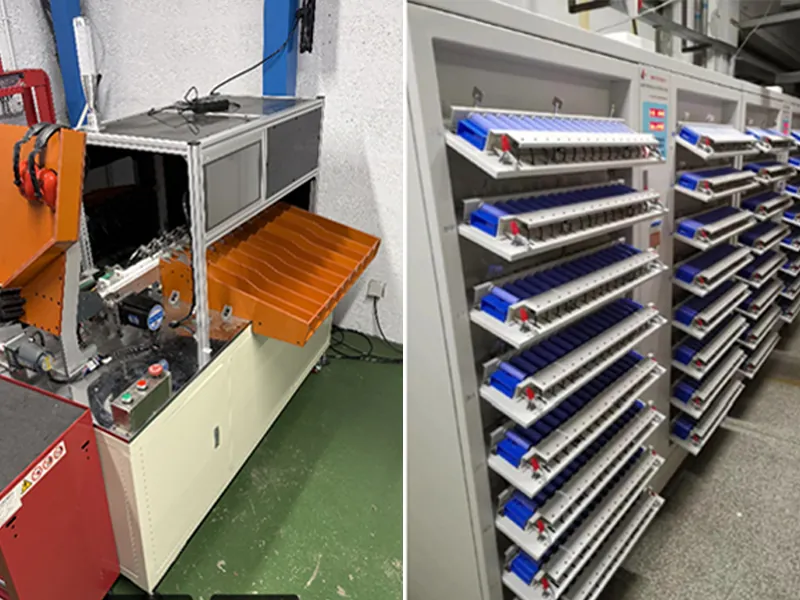
Viable cells proceed to automated multi-channel charge-discharge testing beds:
- Cells are cycled under controlled current rates to determine actual remaining discharge capacity.
- Temperature variance across individual cells is tracked via thermal imaging sensors during charge cycles.
- Integrated testing software calculates residual State of Health (SoH) and automatically classifies cells into precise performance bins for secondary matching.
7. Refurbishing and Repurposing
Qualified cells are cleaned, re-insulated with fresh dielectric sleeves, and assembled into second-life battery packs. These refurbished modules are integrated with newly calibrated BMS units, serving secondary applications such as stationary solar energy storage, telecommunication backup power, and low-speed utility vehicles.
The Material Recycling Track: End-of-Life Processing
Cells that fail repurposing thresholds, along with damaged batteries and manufacturing rejects, enter the material recovery process to extract virgin-grade metallic elements.
Mechanical Dismantling and Pre-treatment
Prior to chemical metal extraction, spent cells must undergo mechanical volume reduction to isolate active materials:
- Inert Gas Shredding: Cells are fed into industrial dual-shaft shredders flooded with nitrogen or argon atmospheres to prevent spontaneous combustion during casing rupture.
- Low-Temperature Pyrolysis / Drying: Shredded materials are gently heated in a vacuum or rotary drying kiln to evaporate organic electrolytes and deactivate combustible solvents safely.
- Multi-Stage Physical Separation: Air classification (zig-zag separators) extracts plastic separators and lightweight foils; magnetic drums pull out ferrous casing metals; eddy-current separators isolate non-ferrous aluminum and copper.
- Black Mass Recovery: The remaining active electrode materials (nickel, cobalt, manganese, lithium, and graphite) are pulverized and sieved into a concentrated, high-purity powder known as Black Mass.
Metallurgical Recovery Technologies
Extracted black mass and dismantled components are processed through high-efficiency metallurgical systems to return metals to the supply chain.
Pyrometallurgical Smelting Process
Pyrometallurgy utilizes high-temperature thermal treatment to extract high-value transition metals:
- The prepared battery scrap or black mass is fed directly into a smelting furnace (such as a shaft, blast, or electric arc furnace) operating at temperatures typically exceeding 1,200 to 1,400 degrees Celsius.
- Organic binders, plastics, and carbonaceous anode materials burn off, providing partial process heat.
- The high-density molten phase yields a multi-element metallic alloy containing cobalt, nickel, copper, and iron.
- A secondary slag layer traps aluminum, silicon, calcium, and lithium, which can subsequently be processed through dedicated slag-leaching operations to recover lithium concentrates.
- Off-gases pass through multi-stage baghouses, wet scrubbers, and regenerative thermal oxidizers (RTO) to neutralize fluorides and volatile organic compounds (VOCs).
Hydrometallurgical Extraction Process
Hydrometallurgy employs liquid chemical solutions to selectively dissolve and isolate metals, offering superior recovery rates and lower energy consumption:
- Leaching: Black mass is dissolved in an acidic solution (predominantly sulfuric acid combined with hydrogen peroxide as a reducing agent) or alkaline reagents, converting solid metal oxides into an aqueous metal-rich leachate.
- Impurity Removal: Targeted chemical precipitation removes residual iron, aluminum, and copper impurities from the pregnant leach solution.
- Solvent Extraction: Specific organic extractants selectively bind and separate individual metal ions through multiple mixer-settler stages, isolating nickel, cobalt, and manganese in high-purity streams.
- Precipitation and Crystallization: The isolated streams undergo chemical precipitation to synthesize battery-grade precursors, including nickel sulfate, cobalt sulfate, manganese sulfate, and lithium carbonate or lithium hydroxide crystals.
- Closed-Loop Circulation: Residual acids and process water are treated and recirculated back into the leaching stages, minimizing hazardous wastewater generation.
Process Safety, Environmental Controls, and Traceability
Battery dismantling and recycling require stringent environmental safeguards:
- Environmental Containment: Continuous air extraction hoods capture point-source dust and off-gases at every shredding and dismantling workstation, routing exhaust through activated carbon beds and HEPA scrubbers.
- Fire Suppression Systems: Dismantling and discharge areas are protected by continuous infrared thermal imaging cameras linked to automated dry-powder or aerosol fire-extinguishing nozzles.
- Traceability Integration: The recycling line links with digital factory software to calculate material recovery rates by weight and element, providing audited documentation verifying compliance with EU 2023/1542 recovery efficiency targets.
Factory Applications Across Battery Classes
Light Means of Transport (LMT) Battery Recycling
Optimized for the high-volume recovery of e-bike, e-scooter, and cargo-bike battery modules. The line easily accommodates diverse cylindrical and pouch pack architectures, quickly stripping external plastic housings and extracting standard 18650 and 21700 arrays.
Electric Vehicle (EV) Traction Pack Dismantling
Configured with heavy-duty lifting tables, automated robotic bolt-removal arms, and high-voltage safety isolation enclosures capable of handling complex passenger and commercial EV packs weighing up to 800 kilograms.
Industrial Energy Storage and Telecommunications Packs
Specialized for rack-mounted modular systems, handling high-capacity prismatic cells and long-format blade modules with integrated busbar cutting and rapid parallel testing sequences.