No Memory Effect
NiMH cells deliver consistent capacity without the memory effect associated with older battery chemistries.


Proven chemistries and pack designs for emergency, portable and outdoor lighting products.
NiMH cells deliver consistent capacity without the memory effect associated with older battery chemistries.
NiMH packs are widely used in emergency lighting for their safety and high-temperature performance.
Li-ion packs power torches, bicycle lights, garden lights and portable lamps for a fast-growing global market.
Pack configurations are designed around your device, weight target, capacity requirement and enclosure.
We assemble packs with fresh cells to ensure full capacity, long operating time and excellent cycle life.
PCM protection guards against over-charge, over-discharge, over-current and short circuit.
Select a battery model below to view its electrical specifications and operating limits.
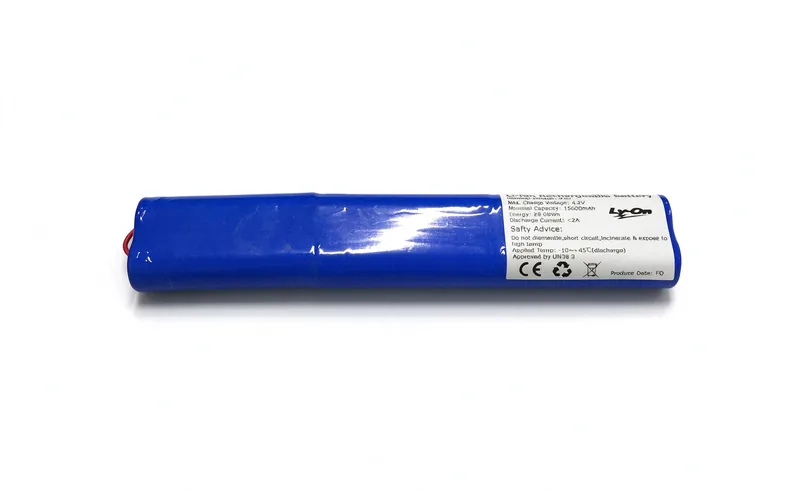
| Battery Type | Li-ion 18650 |
|---|---|
| Configuration | 1S6P (six parallel cells) |
| Nominal Voltage | 3.7V |
| Application | LED emergency light / portable lamp / garden lamp |
| Operating Temperature | Charging 0~45°C · Discharging -20~60°C |
| Protection | Over-Charge / Over-Discharge / Over-Current / Short Circuit |
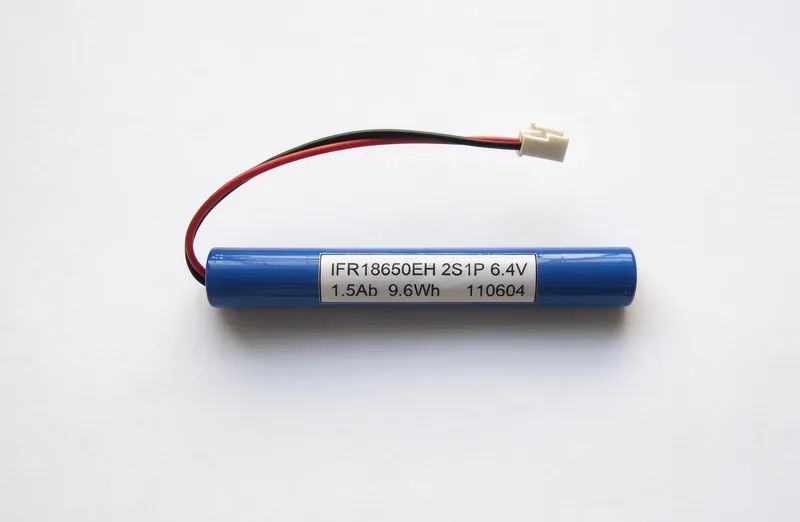
| Battery Type | LiFePO4 18650 1S1P |
|---|---|
| Nominal Voltage | 3.2V |
| Capacity | 1500mAh |
| Energy | 4.8Wh |
| Work Voltage Range | 2.5–3.65V |
| Cycle Life | >2000 cycles (at 0.2C charge/discharge) |
| Operating Temperature | Charging 0~45°C · Discharging -20~60°C |
| Application | Emergency lights / wireless phones / telecom devices |
| Protection | Over-Charge / Over-Discharge / Over-Current / Short Circuit |
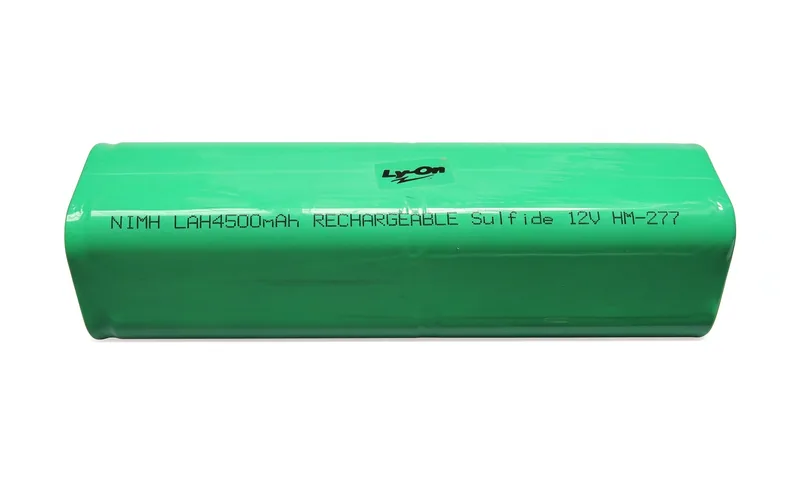
| Battery Type | NiMH 18700 |
|---|---|
| Nominal Voltage | 12V |
| Capacity | 4500mAh |
| Configuration | 10S1P (ten 1.2V cells) |
| Operating Temperature | Charging 0~45°C · Discharging -20~60°C |
| Application | Emergency lighting / portable lamps / backup lighting |
| Protection | Over-Charge / Over-Discharge / Over-Current / Short Circuit |
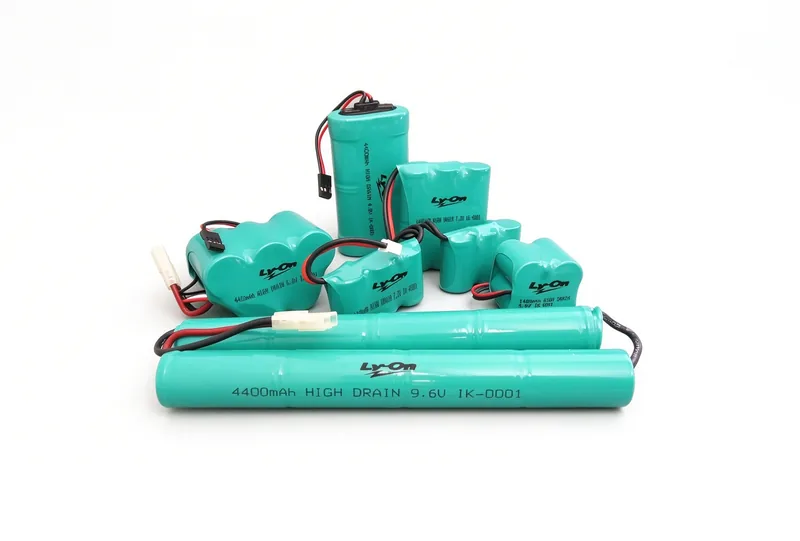
| Battery Type | Ni-MH AA Battery |
|---|---|
| Typical Voltage | 6V |
| Work Voltage Range | 5.0–7.0V |
| Capacity | 1600mAh / 1800mAh / 2000mAh |
| Applied Current | <2A |
| Cycle Life | >500 cycles (at 0.2C charge/discharge) |
| Size | max. 14.8 × 51 × 73.0 mm |
| Applied Temperature | 0–70°C |
| Application | Emergency lighting / portable devices / broadcasting devices / handheld radio |
| LiFePO4 26650 1S1P | 3.2V · 2.5Ah / 3.2Ah · 32.5 × 60.0 mm · >2000 cycles · emergency lights, wireless phones, telecom devices |
|---|---|
| NiMH A 4.8V | 4.8V · 2200mAh · 17.9 × 200 mm · >500 cycles · emergency light, high-temperature devices, LED lighting |
Lighting battery packs are tested and certified to the following international safety and transport standards.
A closer look at the standards our lighting batteries comply with.
Safety requirements for portable sealed secondary lithium cells and batteries containing non-acid electrolyte, under intended use and reasonably foreseeable misuse. It is the necessary certification for selling lithium batteries in the EU region and covers Li-ion cells and packs under 60 VDC.
Covers household and commercial batteries, including lithium rechargeable packs, against risks of fire, explosion and electric shock during normal use and foreseeable misuse.
UN Manual of Tests and Criteria, Section 38.3. All lithium batteries shipped by air, sea or land must carry the relevant test report and certification. Li-ion cells and packs belong to UN3480; batteries installed in a device are packaged under UN3481.
The EU New Battery Regulation defines battery categories and compliance duties across the battery lifecycle. RoHS 2.0 restricts lead, cadmium and mercury in electrical goods.
Important operating and safety instructions. Please read carefully before installation and use.
Please use qualified equipment for battery charging and discharging, and follow the operating instructions strictly.
The PCM of lithium rechargeable batteries provides over-charge and over-discharge safety protection. The applied device shall be configured with reasonable cut-off voltages according to the battery electrical parameters.
Do not mix batteries of different models or batteries from different manufacturers.
Do not combine new and old batteries for use.
Do not short-circuit the positive and negative terminals with any metal conductors.
Do not pierce, strike, trample, fold or violently impact the batteries with metal tools or by any other means.
Do not place, charge or operate the batteries in vehicles or confined spaces where the ambient temperature may exceed 60°C.
Do not reverse-charge the batteries.
Do not disassemble or modify the battery, including its internal circuit structure.
Do not use damaged batteries, including units with broken sealing edges, damaged outer PVC casings or electrolyte leakage.
Do not immerse the battery in water or expose it to moisture.
Do not use or store the battery near fire sources or heaters.