
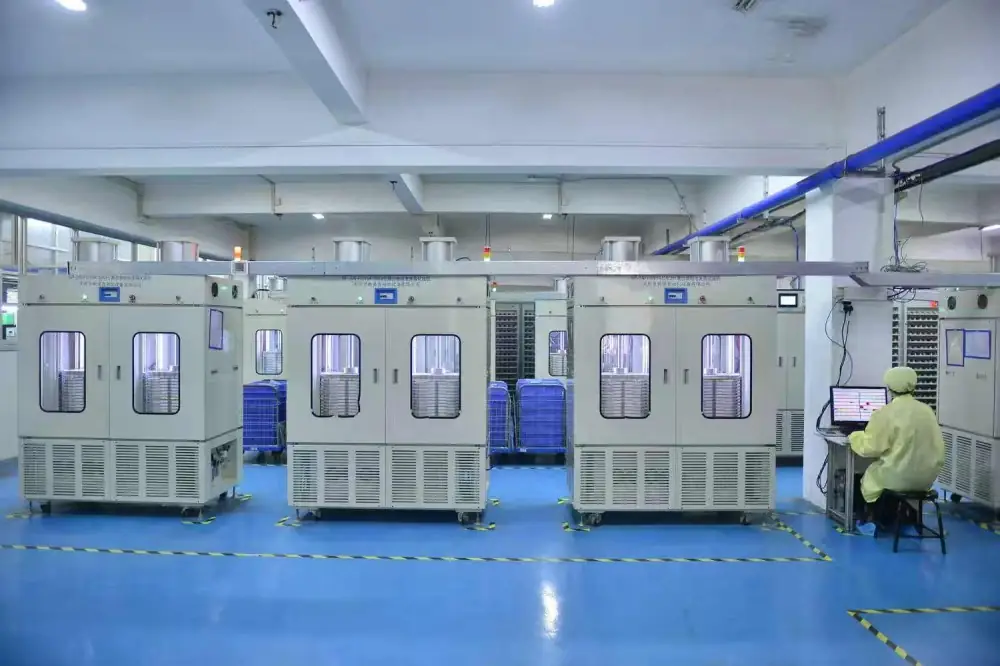
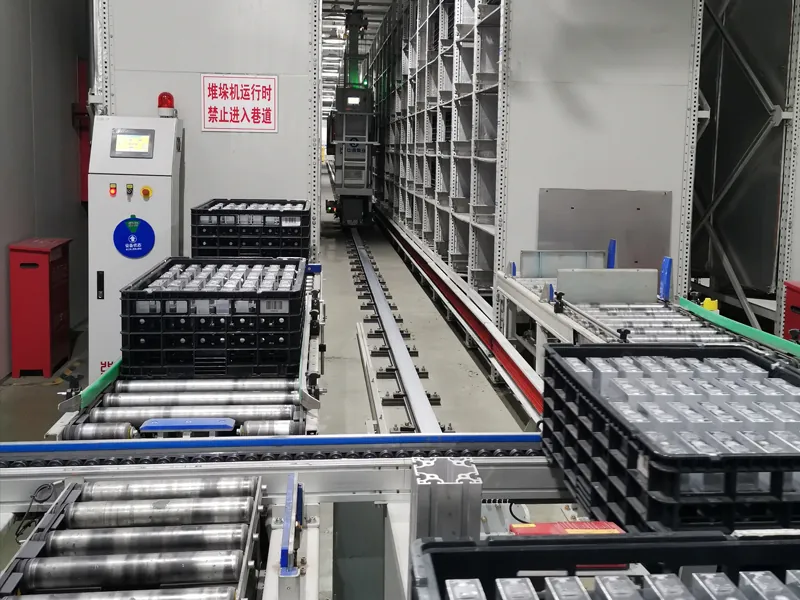
Prismatic Lithium-ion Battery Cell Production Line
Overview of Prismatic Cell Manufacturing
The prismatic aluminum-cased lithium-ion battery has emerged as a dominant form factor across new energy vehicles (NEVs), industrial machinery, and large-scale battery energy storage systems (BESS). Its rigid outer casing provides superior structural protection, high volumetric packing efficiency, and optimized thermal pathways compared to pouch and cylindrical architectures.
Manufacturing prismatic lithium-ion cells requires multi-disciplinary precision engineering that links chemical synthesis, mechanical forming, micro-joining, and electrochemical activation. Modern production facilities must achieve micro-level mechanical tolerances, sub-ppm moisture control, and zero-defect quality standards.
Our complete prismatic cell manufacturing line integrates front-end slurry preparation and electrode processing, middle-end high-speed cell assembly, and back-end formation, aging, and testing. Each stage is supported by an intelligent Manufacturing Execution System (MES), continuous environmental interlocks, and closed-loop data tracking to maximize line efficiency, safety, and output consistency.
Comprehensive Process Workflow and Equipment Configuration
The manufacturing process is organized into three distinct industrial phases: front-end electrode manufacturing, middle-end cell assembly and sealing, and back-end electrochemical activation and grading.
1. Slurry Preparation
Vacuum planetary or continuous twin-screw mixing of active materials, conductive additives, and polymeric binders in NMP (cathode) and deionized water (anode). Automated viscosity, solid-content, and fineness controls ensure homogeneous dispersion under complete degasification.
2. Electrode Coating
High-speed slot-die coating applies active slurry evenly across continuous aluminum and copper foils. Multi-zone floating ovens ensure gradual drying, while inline beta-gauge or X-ray sensors dynamically calibrate areal density across both sides.
3. Calendering
Heavy-duty hydraulic rolling mills compress the dried electrode strips under continuous high pressure. Closed-loop servo thickness sensors ensure target compact density and uniform porosity without inducing foil creasing or edge cracking.
4. Slitting & Die Cutting
Precision rolling shear slitters divide master mother rolls into discrete strip widths. Continuous high-speed laser cutting or mechanical die-cutting notches out positive and negative tabs with minimal burr formation (burr height strictly controlled under 5 μm).
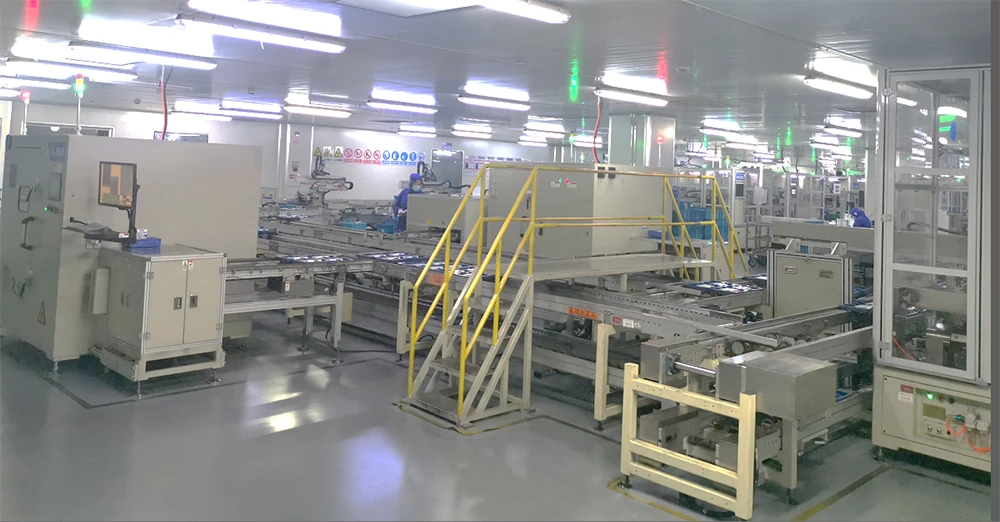
1. Electrode Drying
Pre-cut electrode rolls or sheets are baked in multi-layer vacuum tunnel ovens under extreme dew-point controls to eliminate residual moisture, preventing future electrolyte decomposition.
2. Winding / Stacking
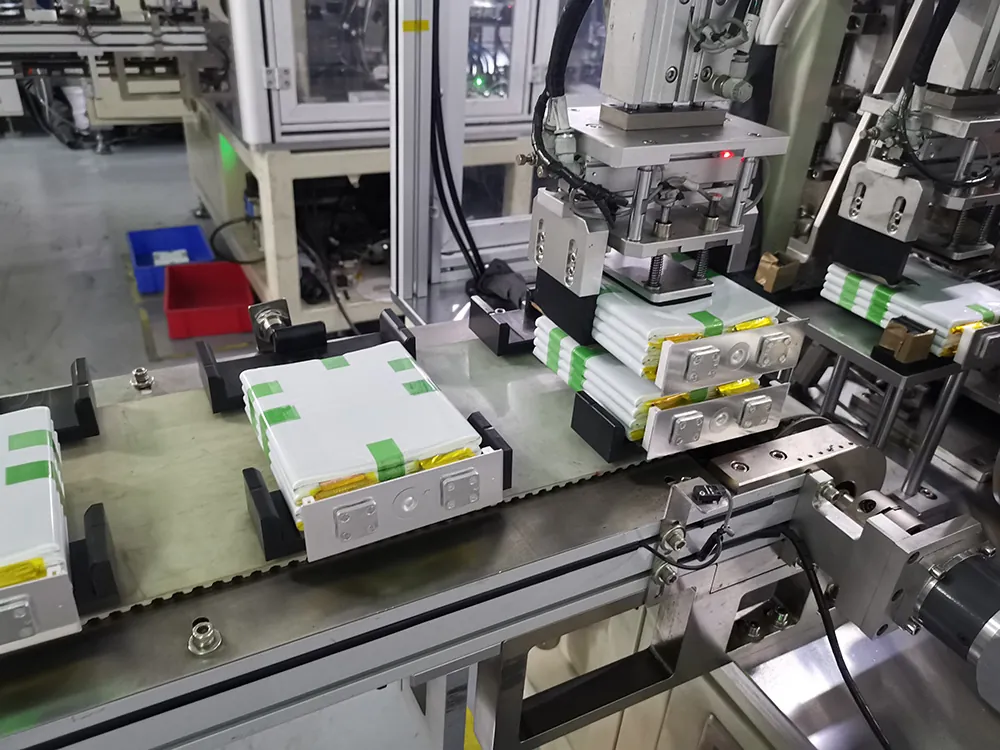
Cathode, anode, and ceramic-coated separator layers are assembled into a bare cell core (jelly roll) via high-tension winding or high-speed Z-fold stacking, accompanied by inline CCD optical alignment to ensure strict layer positioning.
3. Hot Pressing
Thermal flattening stations apply regulated temperature and mechanical pressure to the bare cell, consolidating layer adhesion, reducing internal air pockets, and establishing precise core dimensions for can insertion.
4. Tab Welding
Ultrasonic metal welders or multi-axis fiber lasers join multi-layered foil tabs to the solid terminal posts of the cell top-cover plate, monitored via inline weld current and displacement sensors.
5. Can Insertion & Laser Sealing
The bare cell core is insulated with dielectric wrap film and inserted into the deep-drawn aluminum can. Multi-axis continuous fiber laser welding heads hermetically seal the perimeter of the top cover to the aluminum casing under inert gas shielding.
6. Leak Test & X-Ray Inspection
High-vacuum helium mass spectrometry detects micro-cracks in laser weld seams. High-resolution inline X-ray tomography verifies positive-to-negative anode overhang to eliminate internal short-circuit risks.
7. Cell Vacuum Drying
Assembled aluminum cans are loaded into high-temperature vacuum drying chambers to extract internal moisture down to parts-per-million levels.
8. Vacuum Electrolyte Filling
Automated high-precision metering pumps inject formulated electrolyte through the top-cover injection port under high vacuum, followed by cyclic pressurized soaking to ensure complete wetting of dense electrode layers.
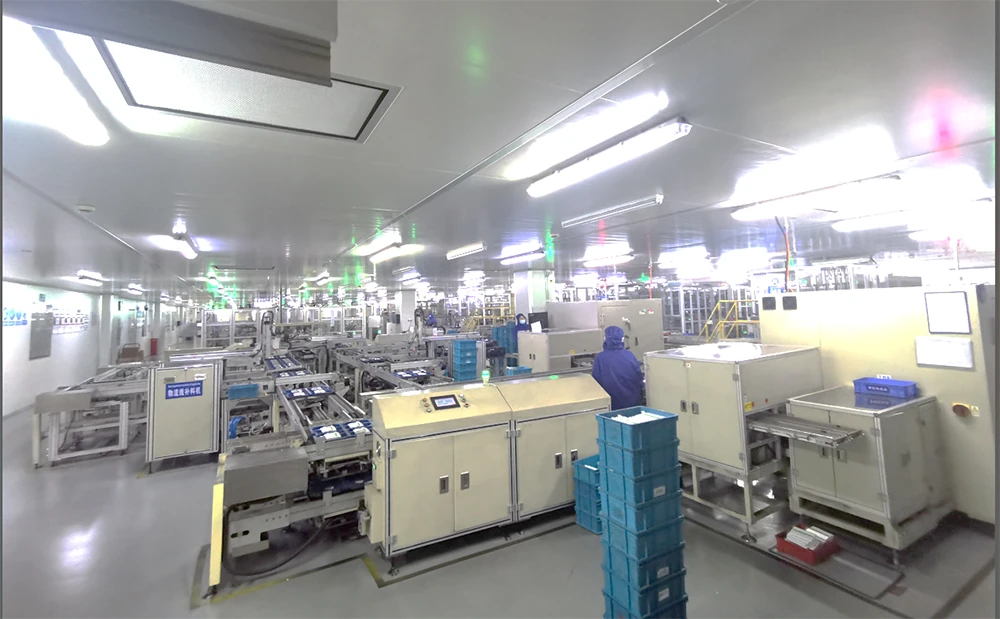
1. Formation
Cells undergo their initial controlled charge and discharge cycles under external clamping pressure and elevated temperature. This process creates a dense, stable Solid Electrolyte Interphase (SEI) passivation film on the anode surface, defining baseline cycle efficiency.
2. Aging
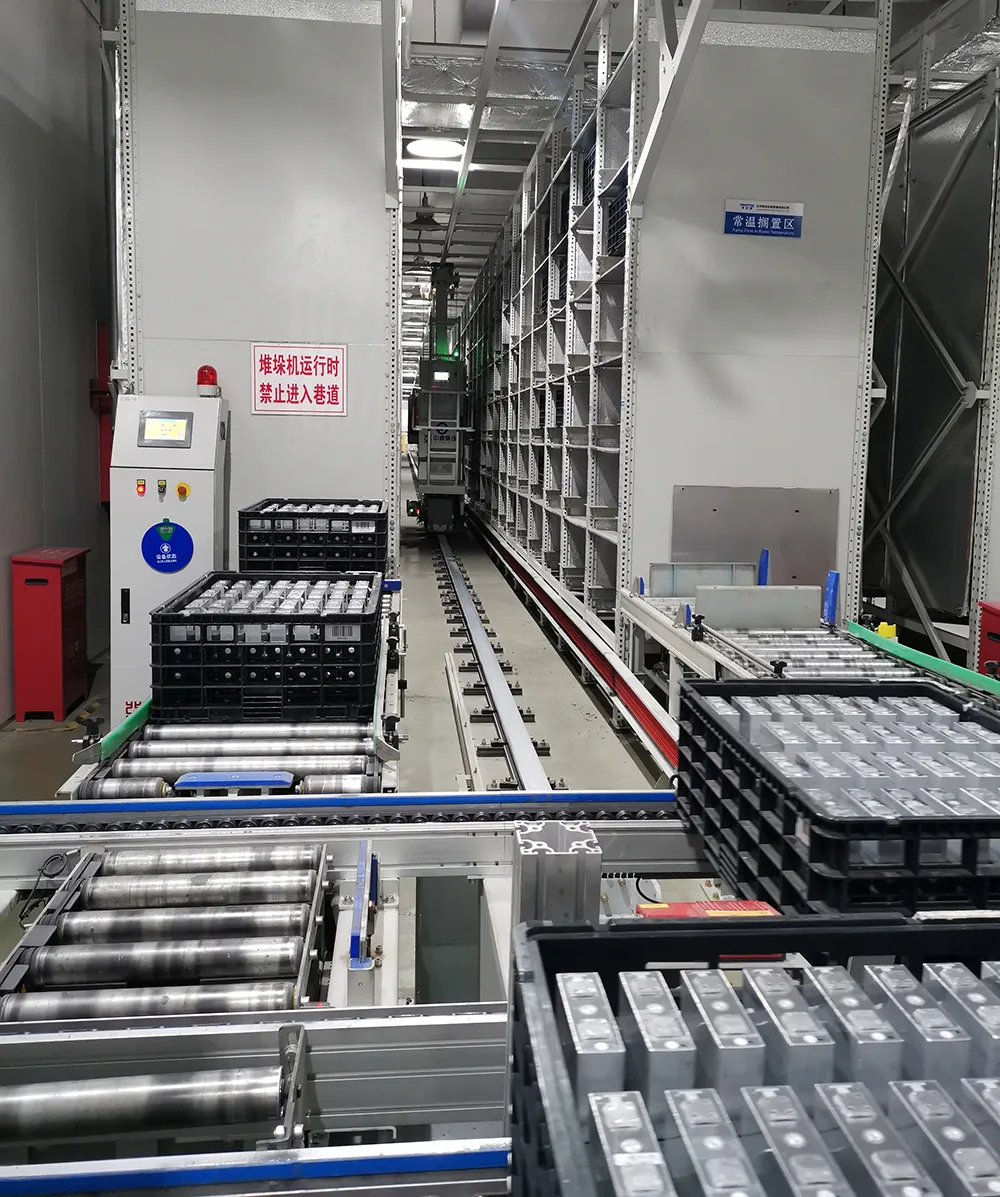
Packs of formed cells are transferred into automated storage and retrieval system (AS/RS) racks for alternating high-temperature and ambient-temperature aging. This stabilizes chemical equilibrium and detects micro-shorts via precise voltage drop (K-value) tracking.
3. Capacity Grading
Multi-channel energy-regenerative testing units cycle every cell through standardized constant-current/constant-voltage (CC-CV) discharge curves, accurately recording true capacity, energy efficiency, and internal resistance.
4. Final Inspection, Laser Marking & Packaging
Final OCV/AC-IR validation confirms grade classification. Laser marking stations engrave high-density unique QR codes for unit-level traceability before automated optical inspection, top sealing pin welding, sorting, and protective packaging.
Inline Quality Control & Metrology Systems
To maintain high industrial yields, the production line incorporates continuous non-destructive testing at each transition point:
- Areal Density Closed Loop: Beta-ray and X-ray measuring gauges mounted on the coating lines communicate directly with the slot-die lip feed screws, adjusting slurry flow dynamically to eliminate coat-weight fluctuations.
- Micro-Burr Detection: Inline optical CCD sensors continuously measure tab edges after slitting, automatically stopping the line if burrs exceed the 5–8 μm threshold.
- Electrode Overhang Inspection: Automated X-ray inspection checks 100% of the corners and active surfaces of wound or stacked cells, verifying that the negative electrode completely covers the positive electrode boundaries to eliminate lithium plating risks.
- Hermetic Seal Verification: Dual-stage helium leak detection isolates weld defects smaller than
1×10⁻⁷ Pa⋅m3/s1×10−7 Pa⋅m3/s, preventing long-term electrolyte leakage or ambient atmospheric ingress. - Continuous K-Value Screening: Autonomous tracking of cell open-circuit voltage over multi-day aging intervals screens out micro-shorted units with elevated self-discharge rates.
Cleanroom and Process Environment Integration
Prismatic lithium-ion chemistry is highly sensitive to moisture and particulate contamination. The production line is designed for complete facility integration:
- Environmental Zoning: Slurry and front-end mechanical cutting operate within Class 100,000 cleanroom environments. Middle-end stacking, tab welding, and can insertion take place inside Class 10,000 dry zones.
- Ultra-Dry Microclimates: Enclosed glovebox canopies and tunnel baking ovens maintain a constant dew point below
−45∘C−45∘Cto−50∘C−50∘Cacross all vacuum filling and soaking operations. - ESD Isolation and Air Filtration: Comprehensive antistatic surfaces, active ionization blowers, and localized laminar-flow hoods prevent metallic and airborne dust particles from settling on exposed electrode surfaces.
Turnkey Plant Engineering and Project Consultation
Our engineering scope covers the full construction and commissioning of prismatic lithium-ion battery cell facilities:
- Facility Planning & Cleanroom Layout: Custom factory layout designs balancing material flow, ergonomics, explosive-proof zoning (ATEX-compliant), and environmental controls.
- Flexible Mechanical Customization: Equipment tooling and clamping fixtures tailored to custom cell dimensions, accommodating small-capacity commercial cells up to large 280Ah–314Ah energy storage formats.
- Factory Acceptance & Site Commissioning: Standardized Factory Acceptance Testing (FAT), on-site installation, Site Acceptance Testing (SAT), and pilot batch optimization led by experienced automation engineers.
- End-to-End Technical Advisory: Comprehensive consulting services covering recipe optimization, slurry rheology control, equipment parameter matching, and operator certification.