Higher Energy Density
Compared with LiFePO4 material, Li-ion chemistry delivers higher energy density for greater range per charge.


The advantages that make Li-ion down tube batteries the ideal power source for modern e-bicycles.
Compared with LiFePO4 material, Li-ion chemistry delivers higher energy density for greater range per charge.
Li-ion cells are lighter in weight than lead-acid and LiFePO4 batteries, reducing overall bike weight.
Li-ion material provides a relatively long service life for years of dependable riding.
Li-ion chemistry provides a good discharge rate for responsive, consistent e-bicycle power.
A professional BMS offers reliable multi-protection for safe, stable battery operation.
Batteries are certified to IEC 62133-2 and EN 50604-1 for EU market compliance.
Select a battery case below to view its electrical specifications, dimensions and protection features.
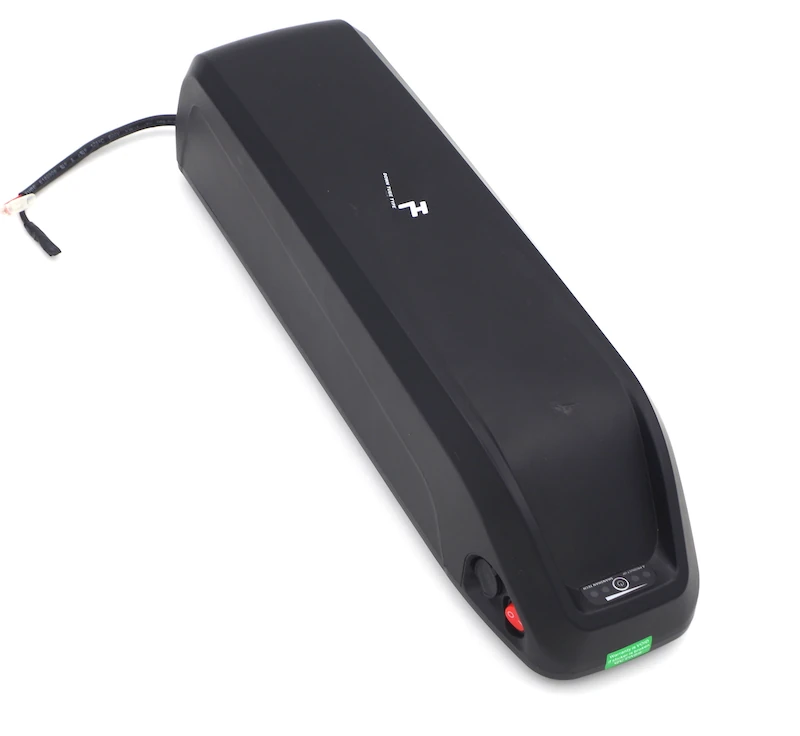
| Battery Case | Hailong / Hailong G80 |
|---|---|
| Nominal Voltage | 36V / 48V |
| Capacity | 10Ah / 14Ah / 17.5Ah |
| Discharge Current | 15A |
| Full-Charged Voltage | 42V / 54.6V |
| Discharge Ending Voltage | 30V / 39V |
| Operating Temperature | Charging 0~45°C · Discharging -20~60°C |
| Cycle Life | >500 cycles (at 0.2C charge/discharge) |
| Dimensions | 362 × 90.3 × 92.7 mm |
| Protection | Over-Charge / Over-Discharge / Over-Current / Short Circuit |
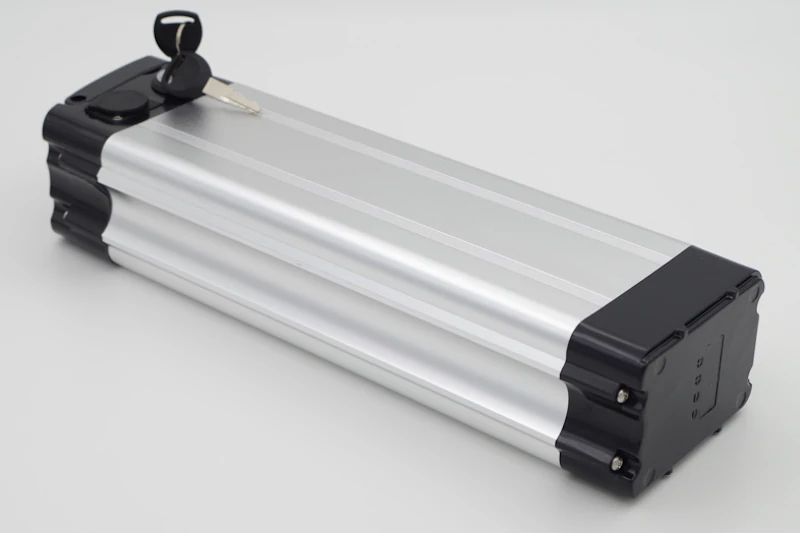
| Battery Case | Silverfish |
|---|---|
| Nominal Voltage | 36V / 48V |
| Capacity | 10Ah / 14Ah / 17.5Ah |
| Discharge Current | 15A |
| Full-Charged Voltage | 42V / 54.6V |
| Discharge Ending Voltage | 30V / 39V |
| Operating Temperature | Charging 0~45°C · Discharging -20~60°C |
| Cycle Life | >500 cycles (at 0.2C charge/discharge) |
| Dimensions | 107.31 × 75.83 × 285 / 325 mm |
| Protection | Over-Charge / Over-Discharge / Over-Current / Short Circuit |
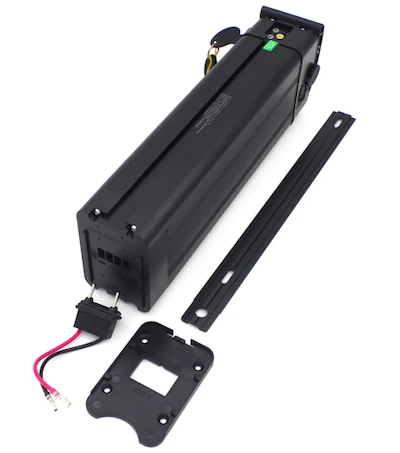
| Battery Case | Small Silverfish |
|---|---|
| Nominal Voltage | 36V / 48V |
| Capacity | 10Ah / 14Ah / 17.5Ah |
| Discharge Current | 15A |
| Full-Charged Voltage | 42V / 54.6V |
| Discharge Ending Voltage | 30V / 39V |
| Operating Temperature | Charging 0~45°C · Discharging -20~60°C |
| Cycle Life | >500 cycles (at 0.2C charge/discharge) |
| Dimensions | 87.11 × 85.10 × 285 / 325 mm |
| Protection | Over-Charge / Over-Discharge / Over-Current / Short Circuit |
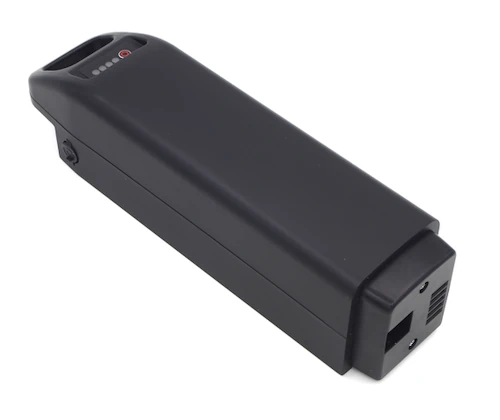
| Battery Case | Rear Rack |
|---|---|
| Nominal Voltage | 36V / 48V |
| Capacity | 10Ah / 14Ah / 17.5Ah |
| Discharge Current | 15A |
| Full-Charged Voltage | 42V / 54.6V |
| Discharge Ending Voltage | 30V / 39V |
| Operating Temperature | Charging 0~45°C · Discharging -20~60°C |
| Cycle Life | >500 cycles (at 0.2C charge/discharge) |
| Protection | Over-Charge / Over-Discharge / Over-Current / Short Circuit |
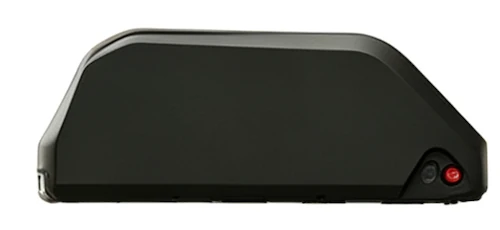
| Battery Case | DP Series |
|---|---|
| Nominal Voltage | 36V / 48V |
| Capacity | 15Ah / 17.5Ah / 20Ah |
| Discharge Current | 15A |
| Full-Charged Voltage | 42V / 54.6V |
| Discharge Ending Voltage | 30V / 39V |
| Operating Temperature | Charging 0~45°C · Discharging -20~60°C |
| Cycle Life | >500 cycles (at 0.2C charge/discharge) |
| Charging Port | DC2.1 / 3-Pin high current |
| Discharge Port | 6-Pin |
| Protection | Over-Charge / Over-Discharge / Over-Current / Short Circuit |
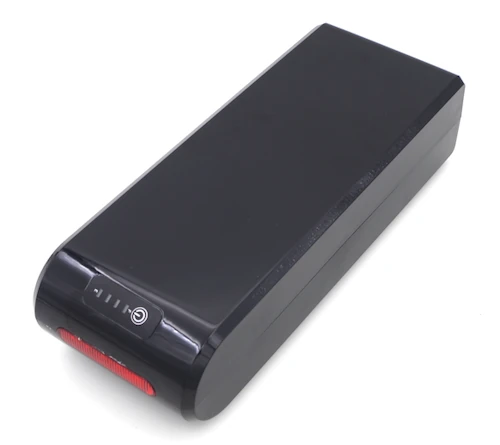
| Battery Case | Mola |
|---|---|
| Nominal Voltage | 36V / 48V |
| Capacity | 13Ah / 15Ah / 20Ah / 21Ah |
| Discharge Current | 15A |
| Full-Charged Voltage | 42V / 54.6V |
| Discharge Ending Voltage | 30V / 39V |
| Operating Temperature | Charging 0~45°C · Discharging -20~60°C |
| Cycle Life | >500 cycles (at 0.2C charge/discharge) |
| Protection | Over-Charge / Over-Discharge / Over-Current / Short Circuit |
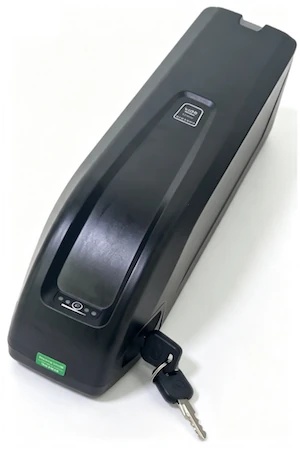
| Battery Case | VIOS |
|---|---|
| Nominal Voltage | 36V |
| Capacity | 19.6Ah |
| Discharge Current | 15A |
| Full-Charged Voltage | 42V |
| Discharge Ending Voltage | 30V |
| Operating Temperature | Charging 0~45°C · Discharging -20~60°C |
| Cycle Life | >500 cycles (at 0.2C charge/discharge) |
| Charging Port | DC2.1 / 3-Pin high current |
| Discharge Port | 6-Pin |
| Protection | Over-Charge / Over-Discharge / Over-Current / Short Circuit |
Every down tube battery is tested and certified to the following international safety and transport standards.
A closer look at the safety and transport standards our Li-ion down tube batteries comply with.
Secondary cells and batteries containing alkaline or other non-acid electrolytes — Safety requirements for portable sealed secondary cells, and for batteries made from them, for use in portable applications — Part 2: Lithium systems. It specifies requirements and tests for the safe operation of portable sealed secondary lithium cells and batteries containing non-acid electrolyte, under intended use and reasonably foreseeable misuse. It is the necessary certification for selling batteries in the EU region, suitable for Li-ion cells and packs under 60 VDC covering the application of various portable devices. Larger lithium battery packs should apply the other relevant certification on the basis of the applied field.
Secondary lithium batteries for light EV (electric vehicle) applications — Part 1: General safety requirements and test methods. It applies to electrically propelled two-, three-, and four-wheeled vehicles (categories L1–L7) as well as electrically assisted cycles and plug-in hybrids such as e-bikes and e-scooters. It covers Class A (DC ≤ 60V, AC ≤ 30V) and Class B (DC up to 1500V, AC up to 1000V) battery systems. EN 50604-1 does not apply to individual cells, non-removable battery systems, primary batteries (including lithium types), or batteries covered by the ISO 12405 series.
An official safety standard by UL Solutions for rechargeable lithium-ion battery packs used in light electric vehicles (LEVs) such as e-bikes, e-scooters, and golf carts. It tests batteries against fire, electric shock, physical crushing, water immersion, and overcharging. It focuses only on the battery pack/system itself, not covering the whole electrical system for personal mobility devices such as hoverboards and skateboards.
UN Manual of Tests and Criteria, Section 38.3 (Transport of Dangerous Goods). All lithium batteries (and some sodium-ion batteries) for air, sea, and land transport must apply the relevant test report and certification. Li-ion battery cells and packs belong to UN3480 in UN 38.3; batteries installed in a device should be packaged on the basis of UN3481. IATA rules allow only cargo to ship Li-ion battery cells and packs.
EU New Battery Regulation (Framework Regulation). It defines all battery categories (portable, SLI, LMT, EV, industrial). A battery should apply the relevant certification on the basis of its application. Battery cells should comply with the relevant heavy metal tests, RoHS and REACH.
Important operating and safety instructions. Please read carefully before installation and use.
Check the battery voltage before installation by pressing and holding the TEST button on the battery capacity indicator. If the indicator shows LOW or MED, recharging is required.
Fitting shall follow the instructions in the owner’s manual.
Ensure positive and negative terminals are correctly connected.
Do not short-circuit the positive and negative terminals with any metal conductor.
Activate the battery once every 3 months: charge at 1.0C to 14.6V, rest for 10 minutes; discharge at 1.0C to 8.2V, rest for 10 minutes; then charge at 1.0C for 40 minutes. If the pack cannot be charged at 1C after discharge, switch the charging current to 0.1C.
Do not pierce, strike, trample, fold or subject the battery to violent impact with metal tools or by any other means.
Do not place, charge or operate the battery inside vehicles or confined spaces where the ambient temperature may exceed 60°C.
Do not reverse-charge the batteries.
Do not disassemble or modify the battery, including its internal circuitry.
Do not use damaged batteries, including batteries with broken sealing edges, damaged outer PVC casing, or electrolyte leakage. If the battery generates abnormal heat during operation, stop charging and discharging immediately to prevent secondary damage and safety hazards.
Do not immerse the battery in water or expose it to moisture.
Do not use or store the battery near fire sources or heaters.
Do not throw the battery into fire or expose it to direct heat.
Do not connect the battery directly to wall outlets.